A short guide to contract upholstery
Rub tests, flammability standards and fabric weights, explained for anyone specifying seating.
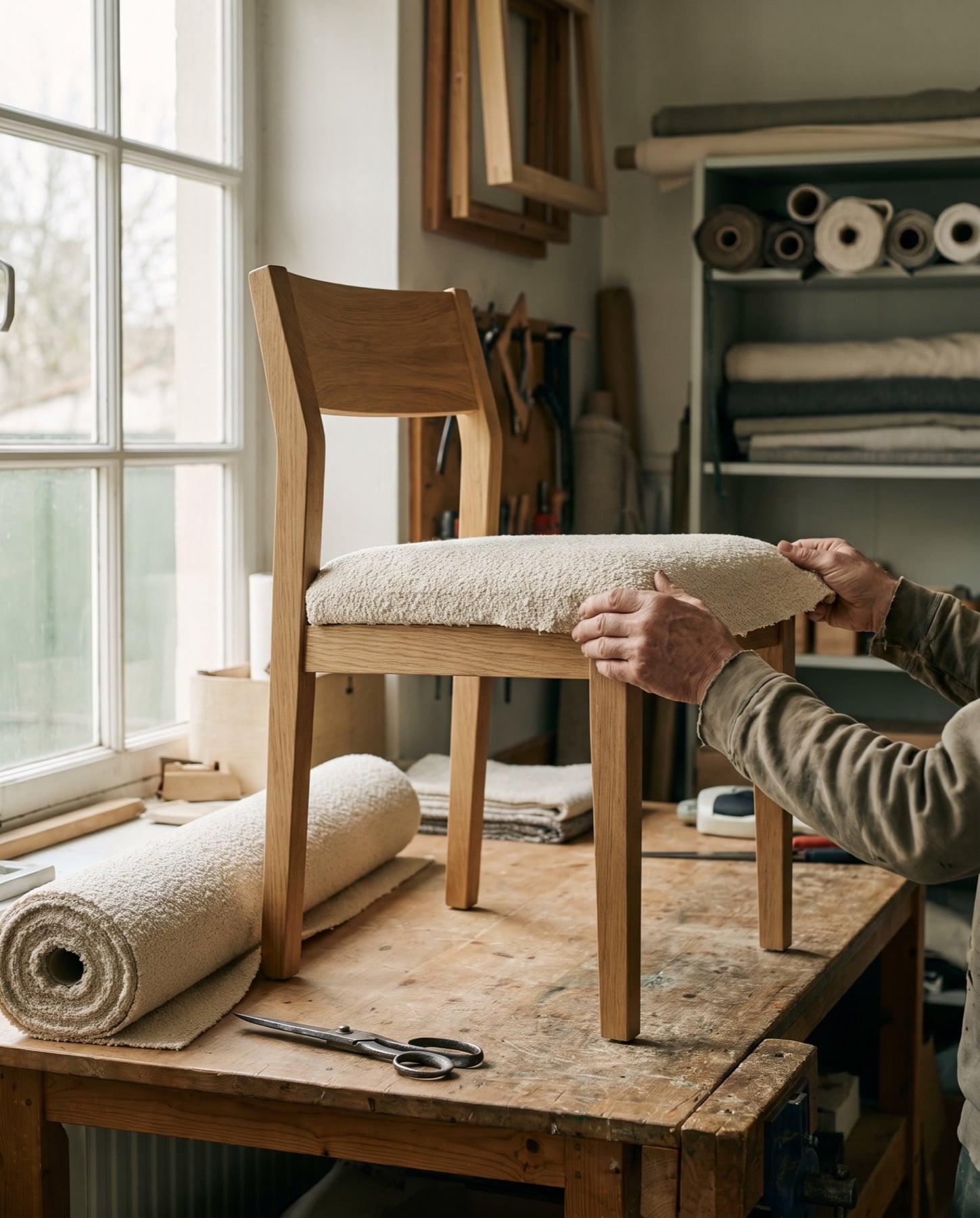
Fabric for seating in hotels, restaurants and offices is chosen on paper as much as by hand. Test results tell you how a fabric is likely to behave over years of use — as long as you know what they measure and what they leave out.
01Abrasion: rub tests
Abrasion resistance is usually reported from one of two tests. The Martindale method rubs a sample in a figure-of-eight motion and counts the cycles it survives; the Wyzenbeek method rubs back and forth and reports “double rubs”. The two scales are not interchangeable, so compare like with like, and ask what level the fabric house recommends for your type of use.
02Pilling and light
Abrasion is only part of how a fabric ages. Pilling tests show whether the surface will bobble with friction, and light-fastness tests show how much the colour will fade in daylight — important for seating by windows. Both are graded on scales the fabric supplier can share.
03Fire performance
Requirements differ by country and by type of building, and they apply to the upholstered composite — fabric, interliner and filling together — not to the fabric alone. In the UK, non-domestic seating is assessed against BS 7176, which uses the ignition sources defined in BS 5852; across much of Europe, EN 1021 parts 1 and 2 cover cigarette and match-flame ignition. Tell your supplier where the project is, and ask for the test certificates for the exact combination being specified.
04Weight and weave
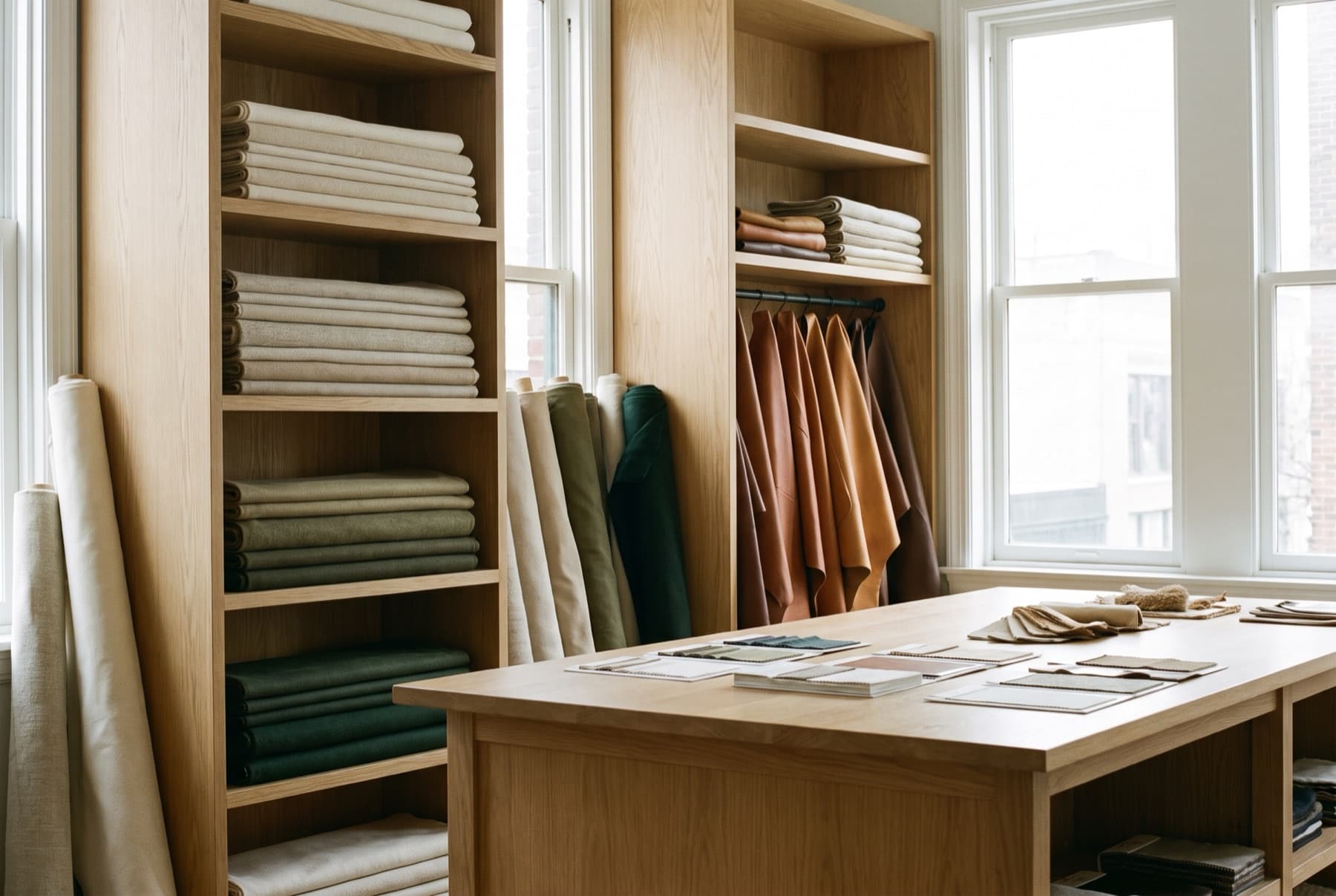
Fabric weight, given in grams per square metre, is a useful description but not a measure of durability on its own: a tightly woven lighter cloth can outlast a loosely woven heavier one. Look at the construction, the fibre and the test results together.
05Cleaning and maintenance
Ask how the fabric should be cleaned before you choose it, and whether that suits the people who will do it. Textured fabrics and mid-tones hide everyday marks; very pale fabrics need a clear routine. Removable seat pads and covers make re-upholstery simpler later.
06Customer’s own material
Many upholstered pieces can be made in a fabric or leather the designer supplies (COM or COL). The maker will confirm how much is needed and check that the material suits the piece — and the same test data still applies.