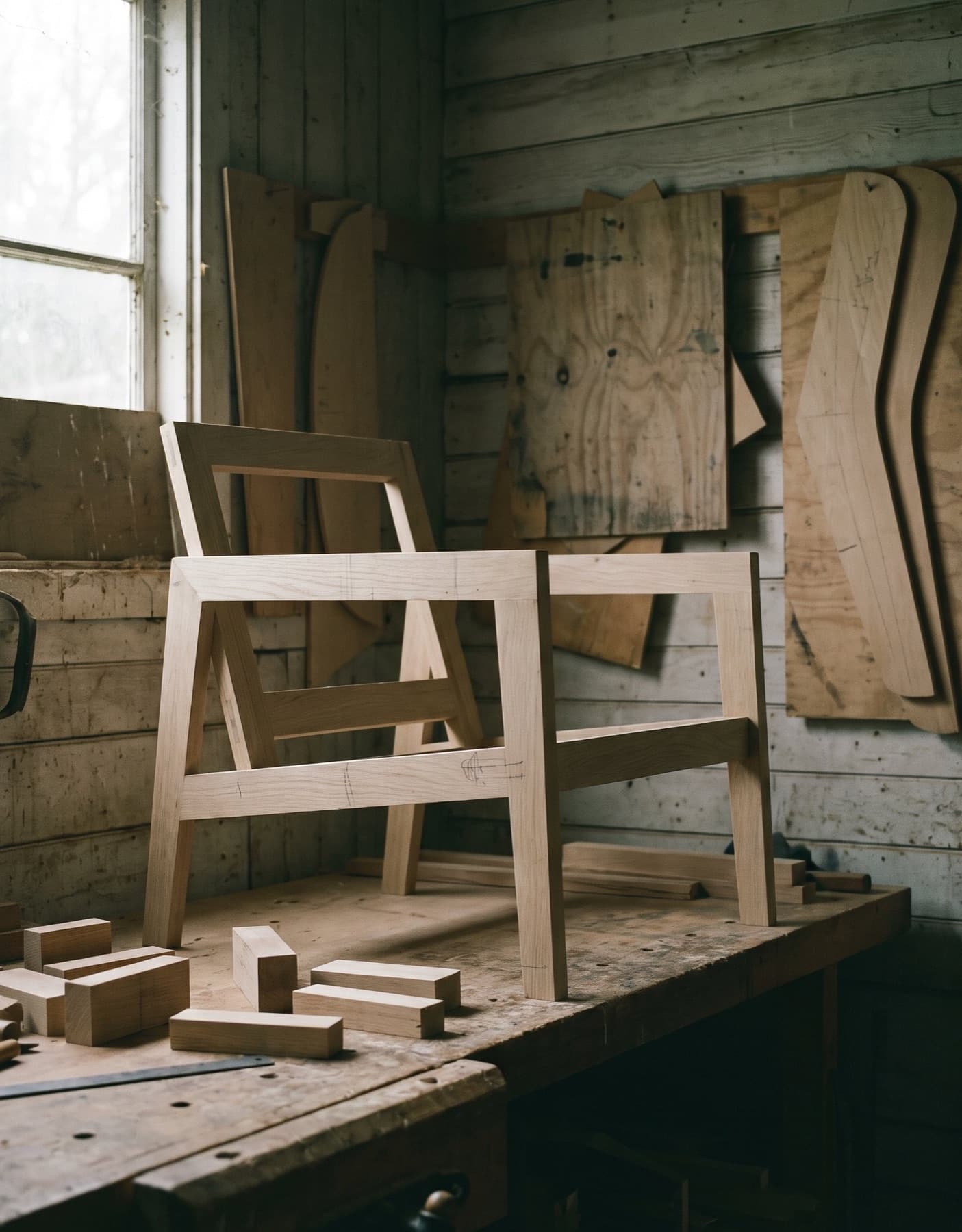
On travertine:a quiet stone for busy rooms
Why a porous, softly figured limestone keeps its place in lobbies, bars and dining rooms — and how to specify it well.
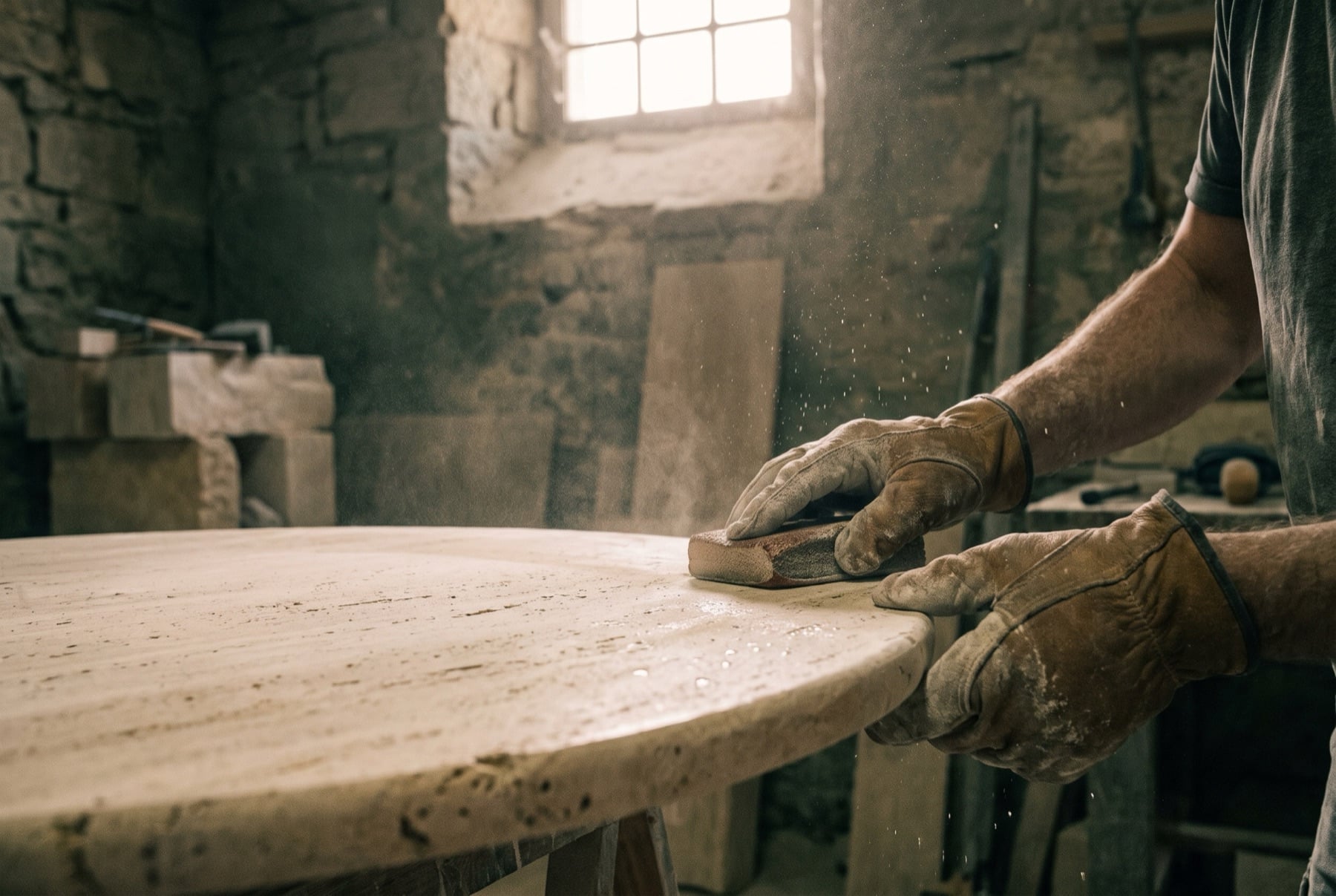
Travertine has been cut for building since Roman times, and it is easy to see why it endures. Warm in colour, softly banded and full of small open pores, it brings a particular calm to a room — and, specified with care, it copes well with daily use.
01A stone made by water
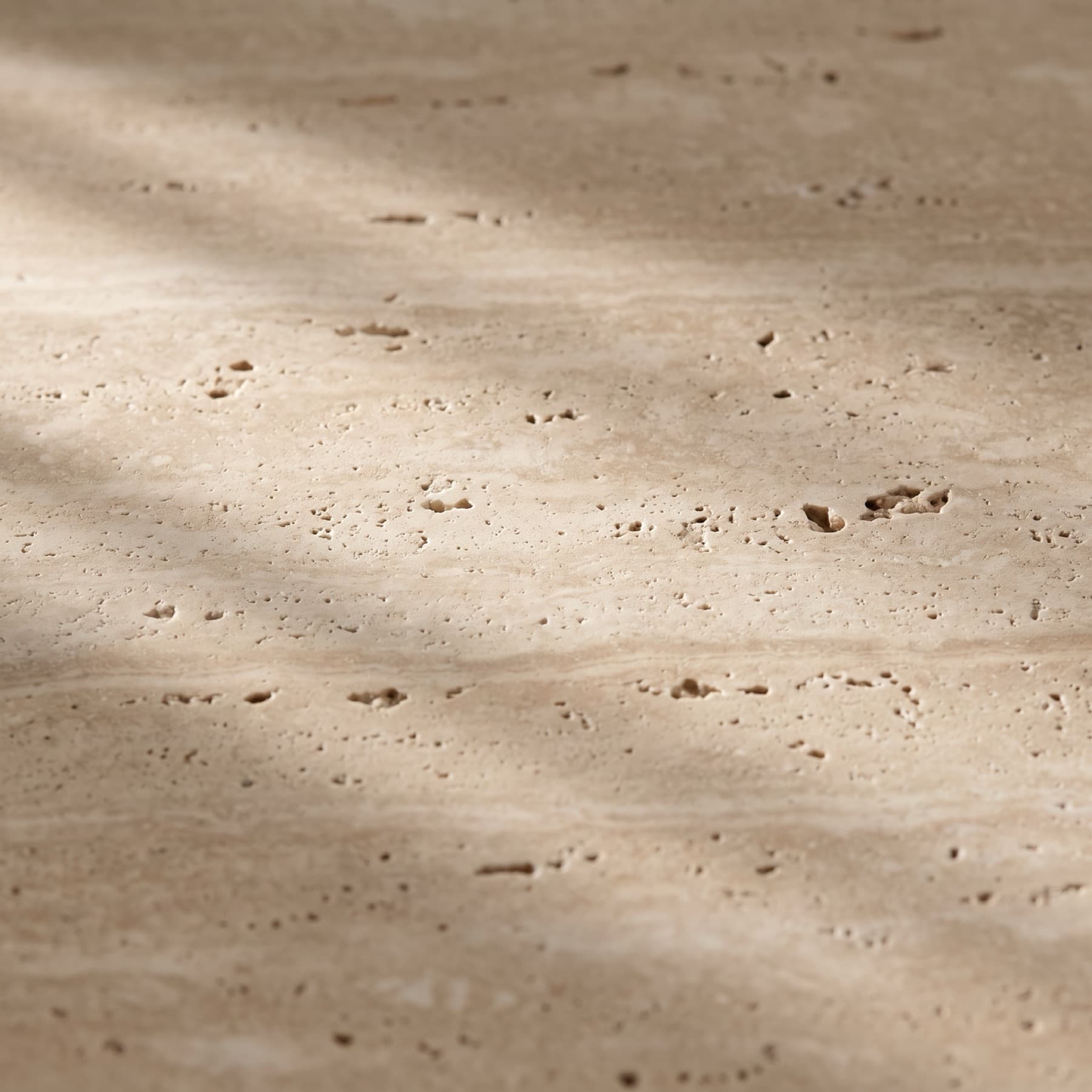
Travertine is a form of limestone. It forms where mineral-rich spring water reaches the surface and releases dissolved carbon dioxide, leaving calcium carbonate behind in thin layers. Over time those layers become the stone’s banding, while gas and plant matter caught within them leave the small voids that give it its texture.
No two blocks are quite alike. Colour runs from near-ivory through honey to deeper browns, depending on the minerals present — which is why samples, ideally large ones, matter more with travertine than with most materials.
02Cut and finish
How a block is cut changes how the stone reads. Cut across its layers — vein-cut — travertine shows long, parallel bands. Cut along them — cross-cut — it shows a softer, cloudier pattern with no strong direction.
The surface is a second decision. A honed finish is smooth and matte; polished is reflective; brushed and tumbled finishes soften the edges and add texture. The pores can be left open for a more tactile, weathered surface, or filled for a flatter top that is easier to keep clean.
“A honed surface forgives the marks of daily use in a way a polished one rarely does.”
03Living with it
Travertine is a calcium-based stone, so it reacts with acids. Wine, citrus, vinegar and some cleaning products can dull — etch — the surface where they sit. A penetrating sealer reduces staining, but it does not prevent etching, so spills are best wiped promptly and surfaces cleaned with a pH-neutral product.
Over time a honed top develops a gentle patina. For many interiors that is the point: the stone records its use quietly, rather than showing every mark as damage.
04Where it works
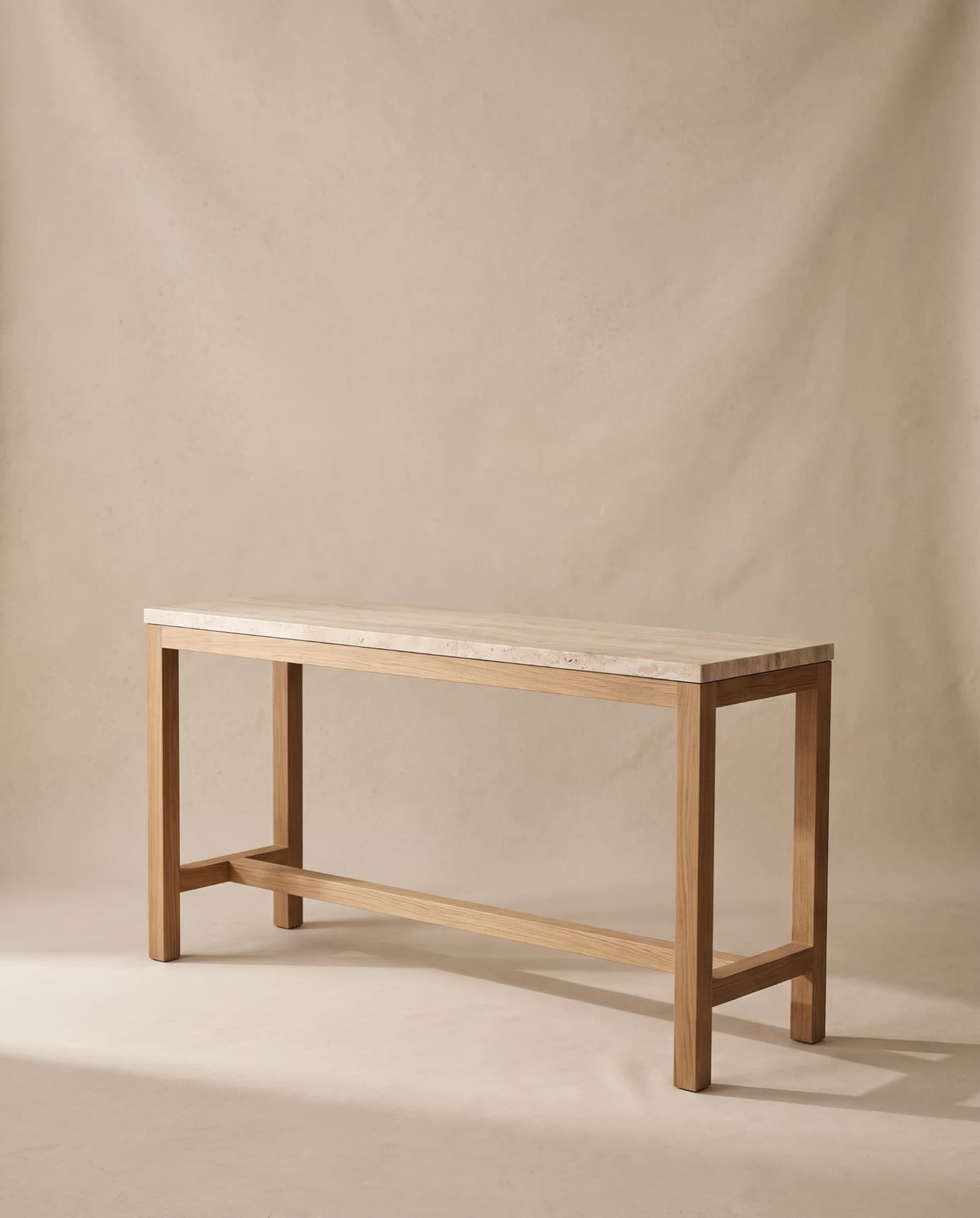
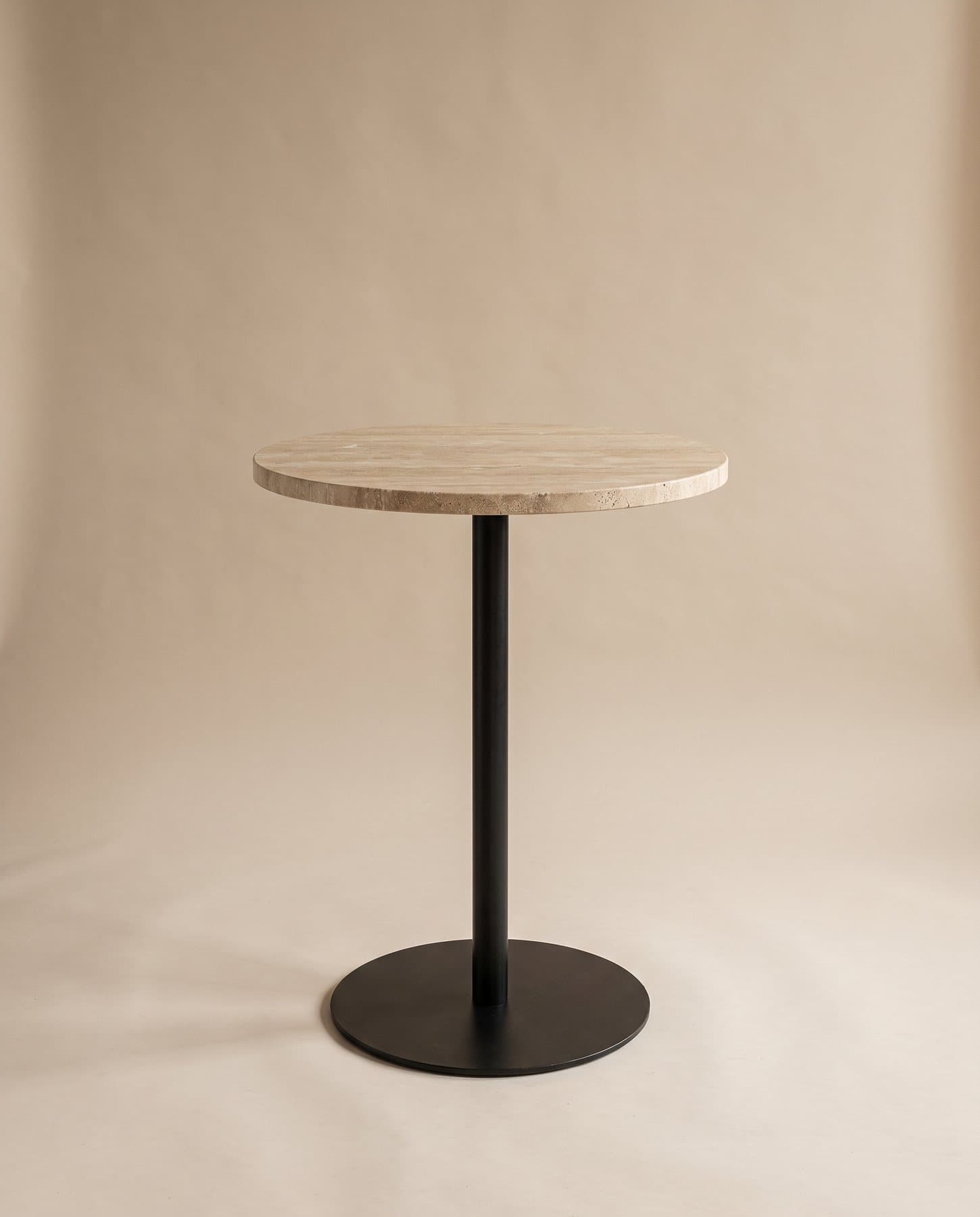
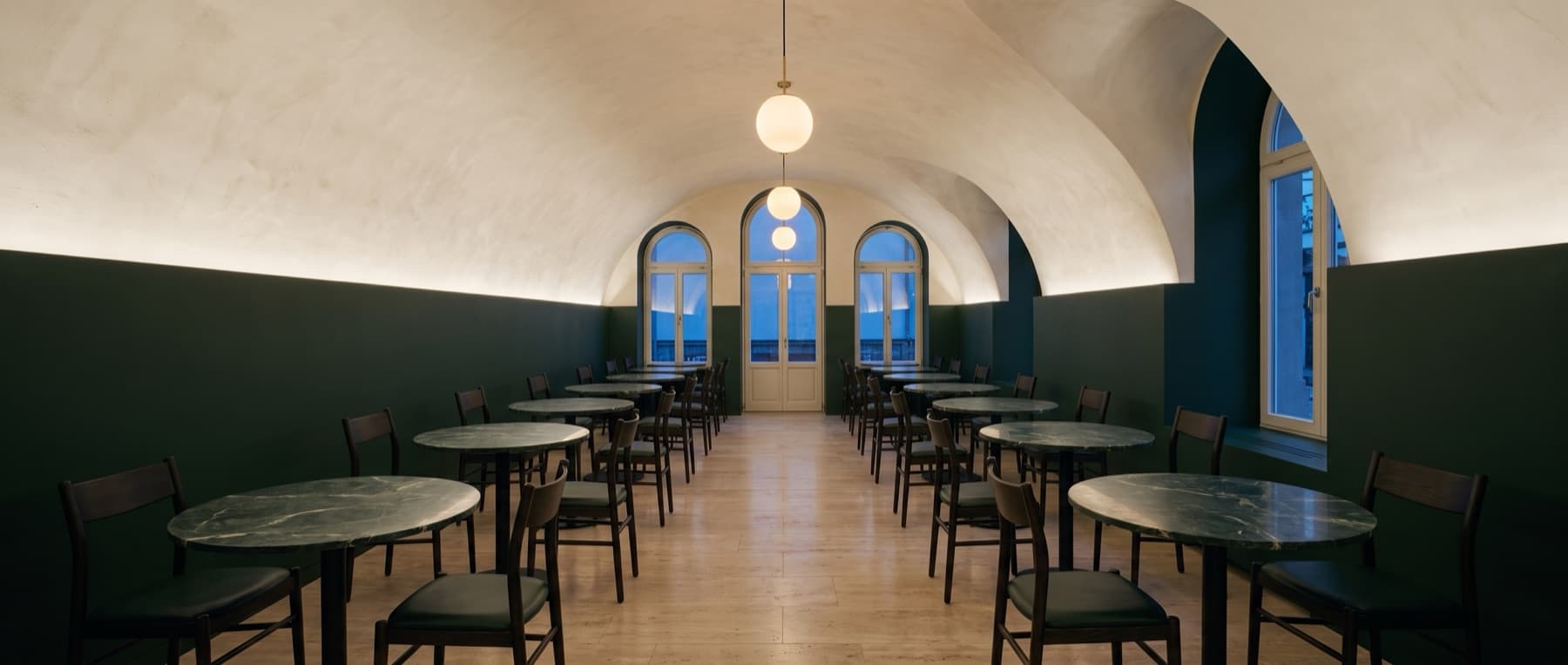
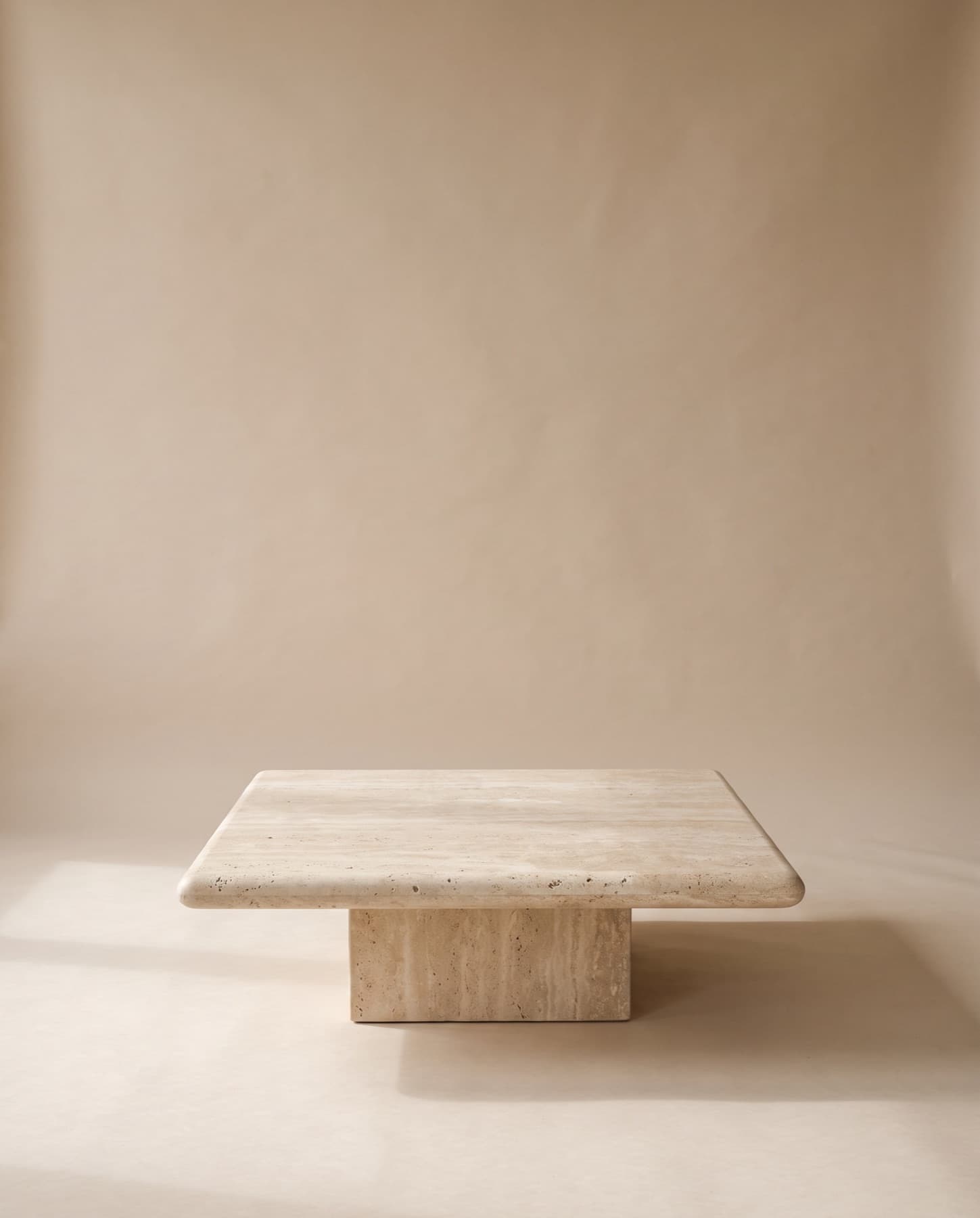
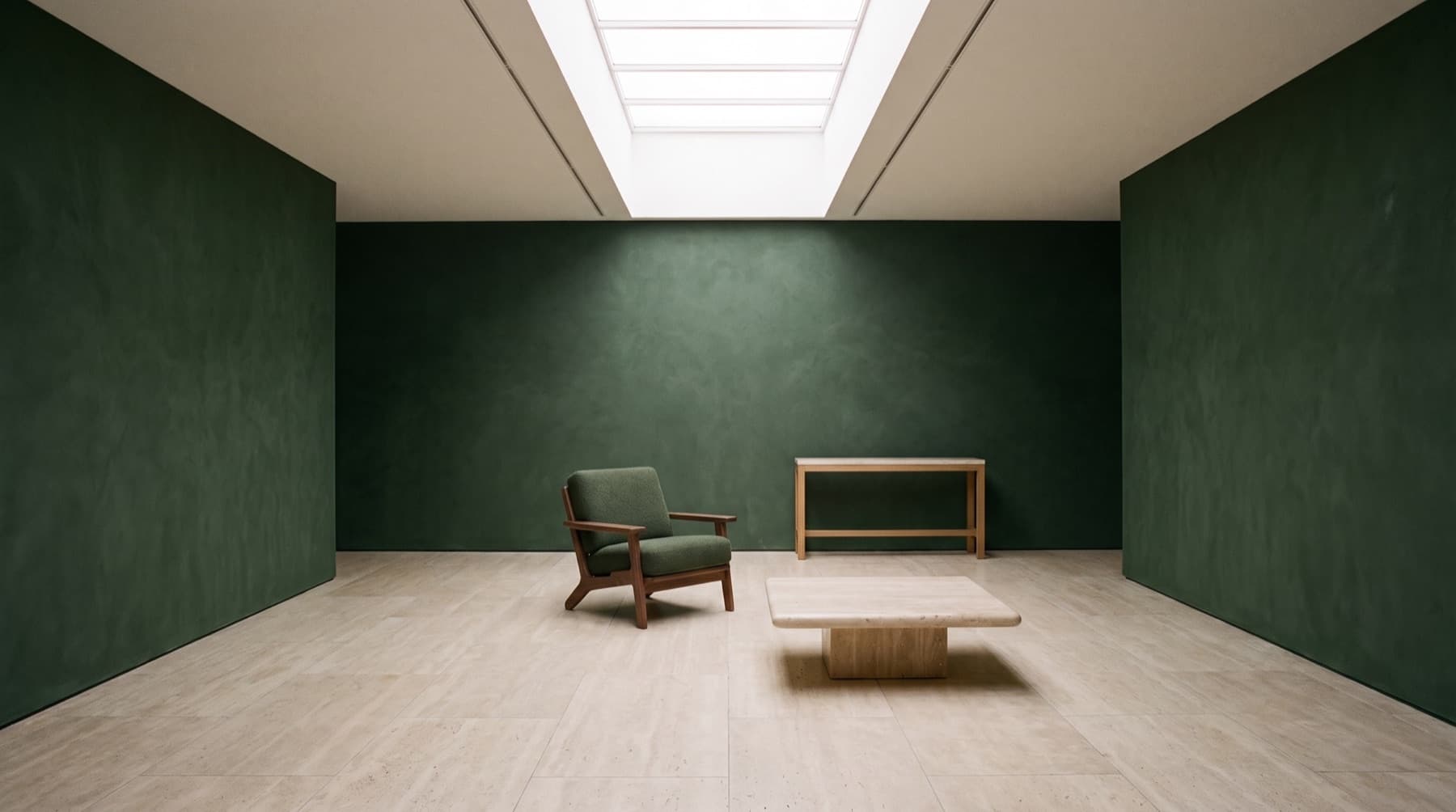
In hospitality interiors travertine is at its best on coffee and side tables, consoles and bar tops — surfaces that are seen and touched, but not cut on. It is heavy, so bases, fixings and floor loads deserve early attention, as does the route a finished piece will take into the building.
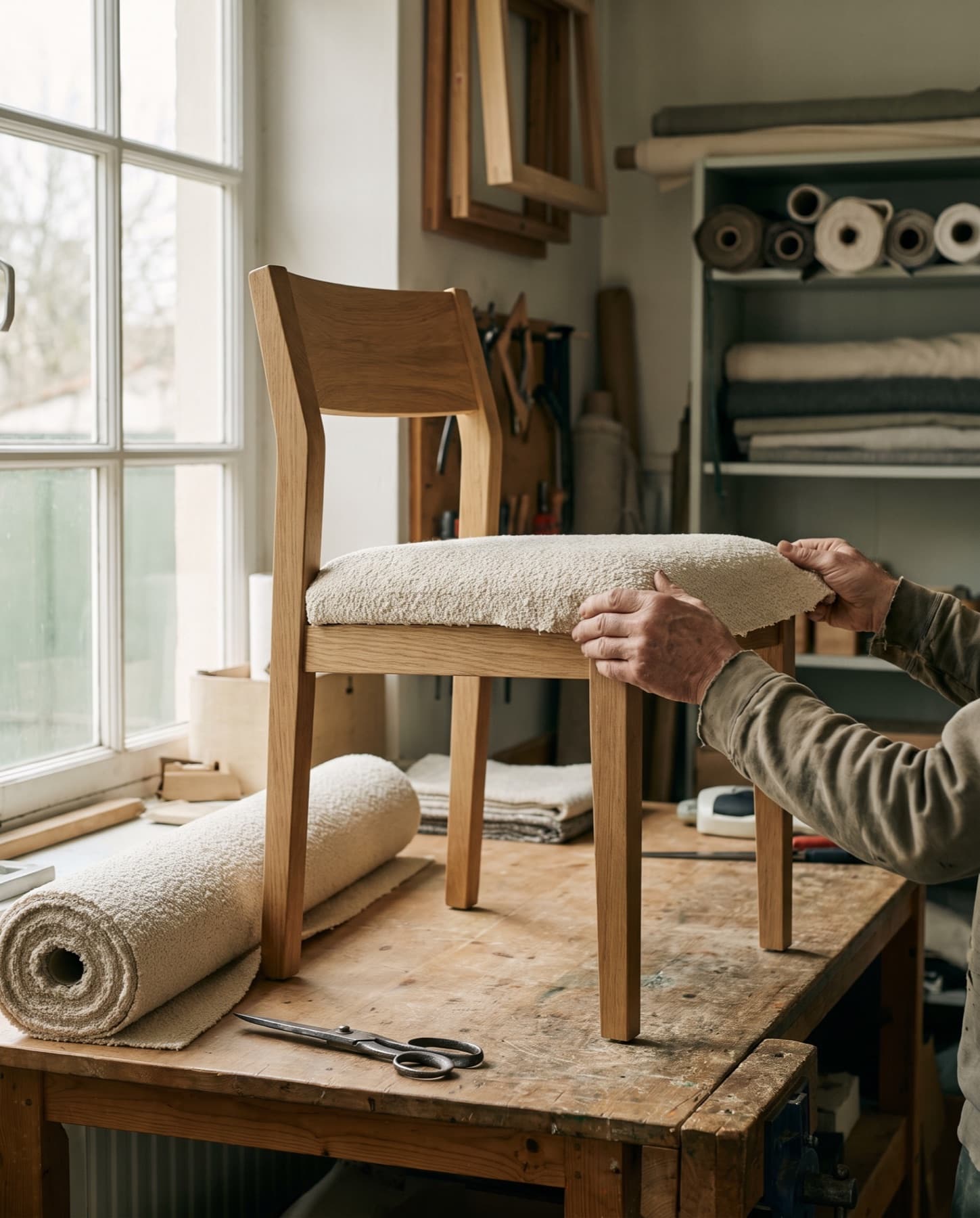
Paired with oak, walnut or brushed bronze, with wool or bouclé close by, it brings warmth without noise — a quiet stone for busy rooms.
Pieces
in stone.
Plinth, Atlas and Perch — all from the Terra collection.
View the Terra collection