Notes from the workshop:hand-finishing oak
Oil, wax or lacquer — how a finish changes the colour, feel and upkeep of solid oak.
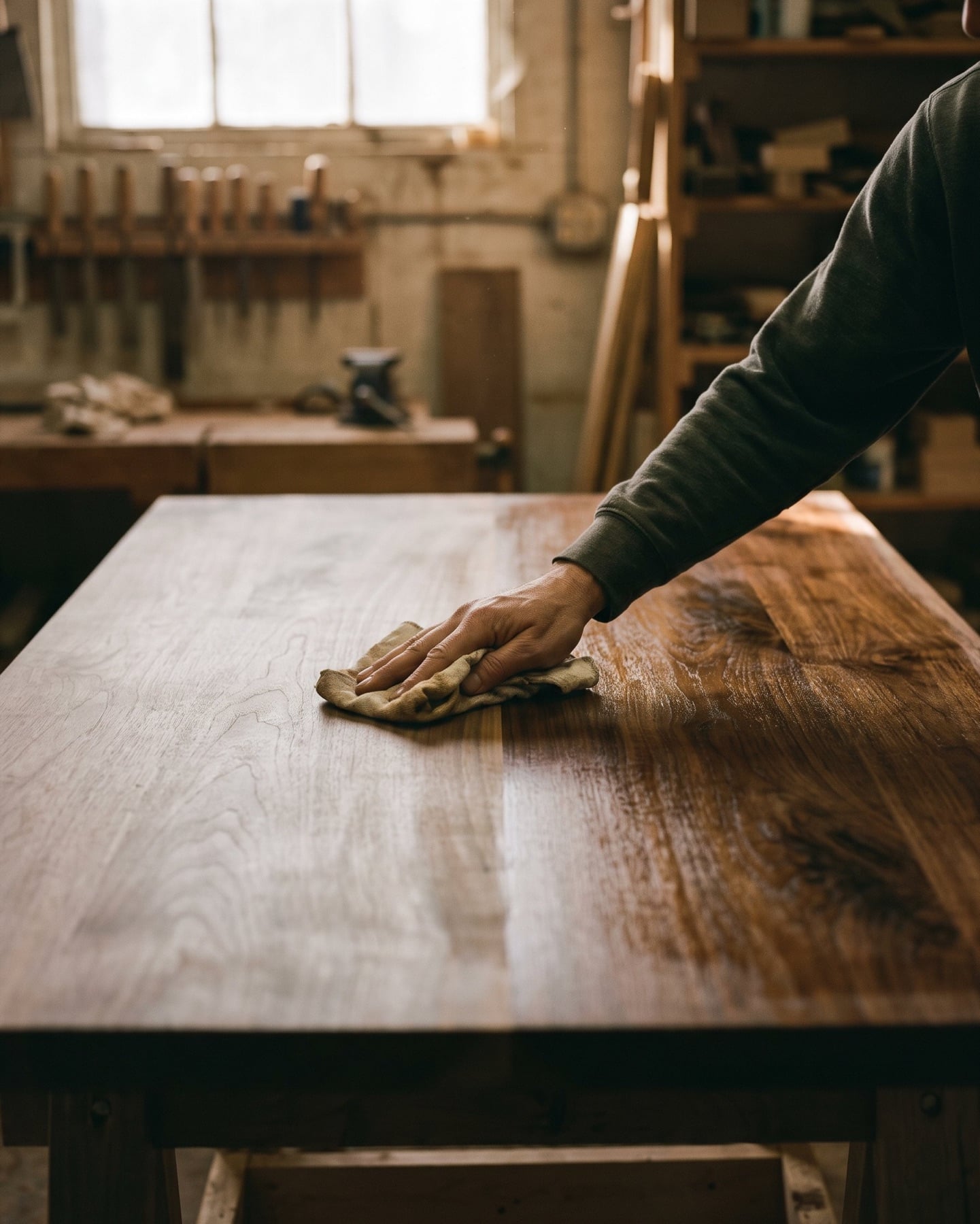
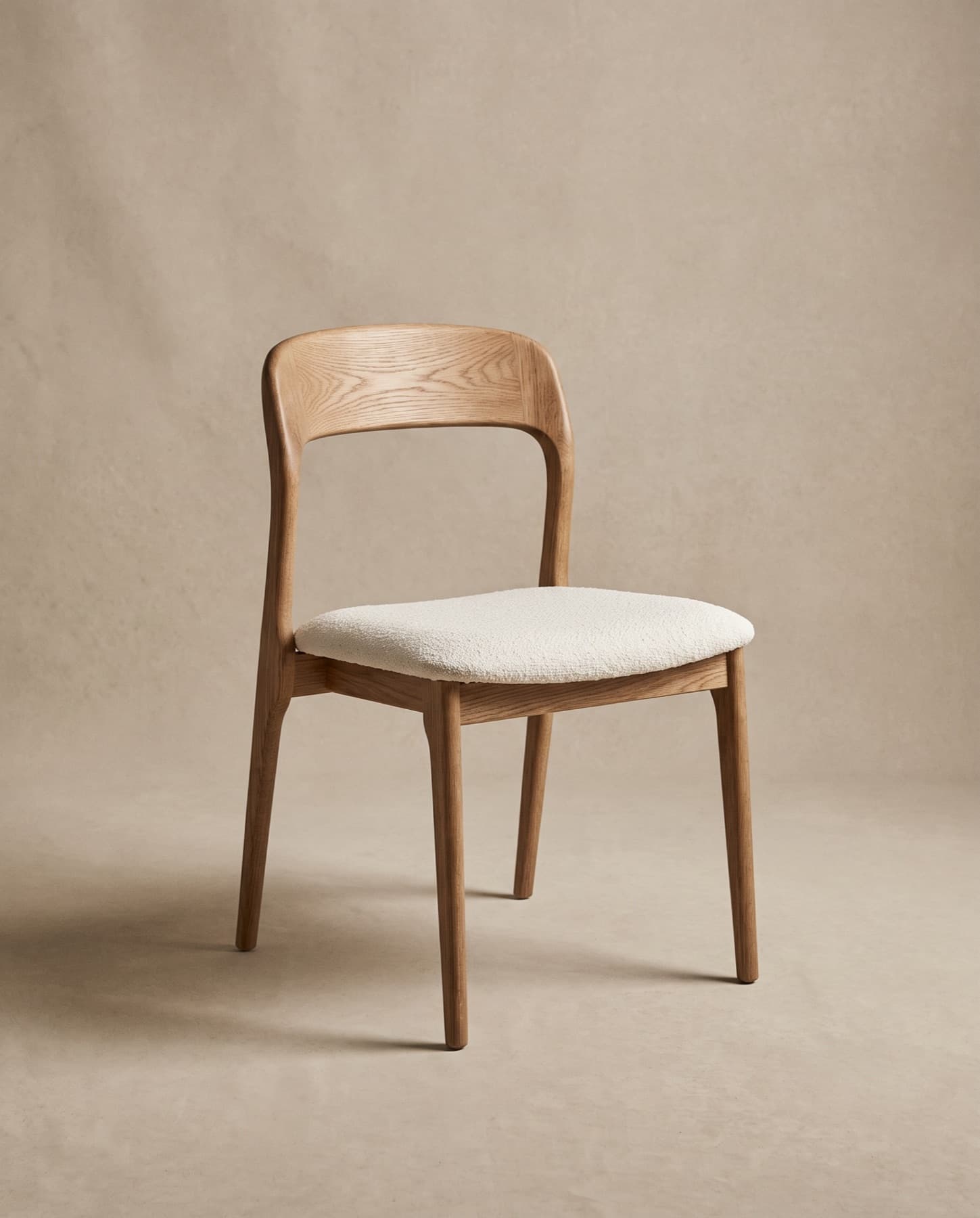
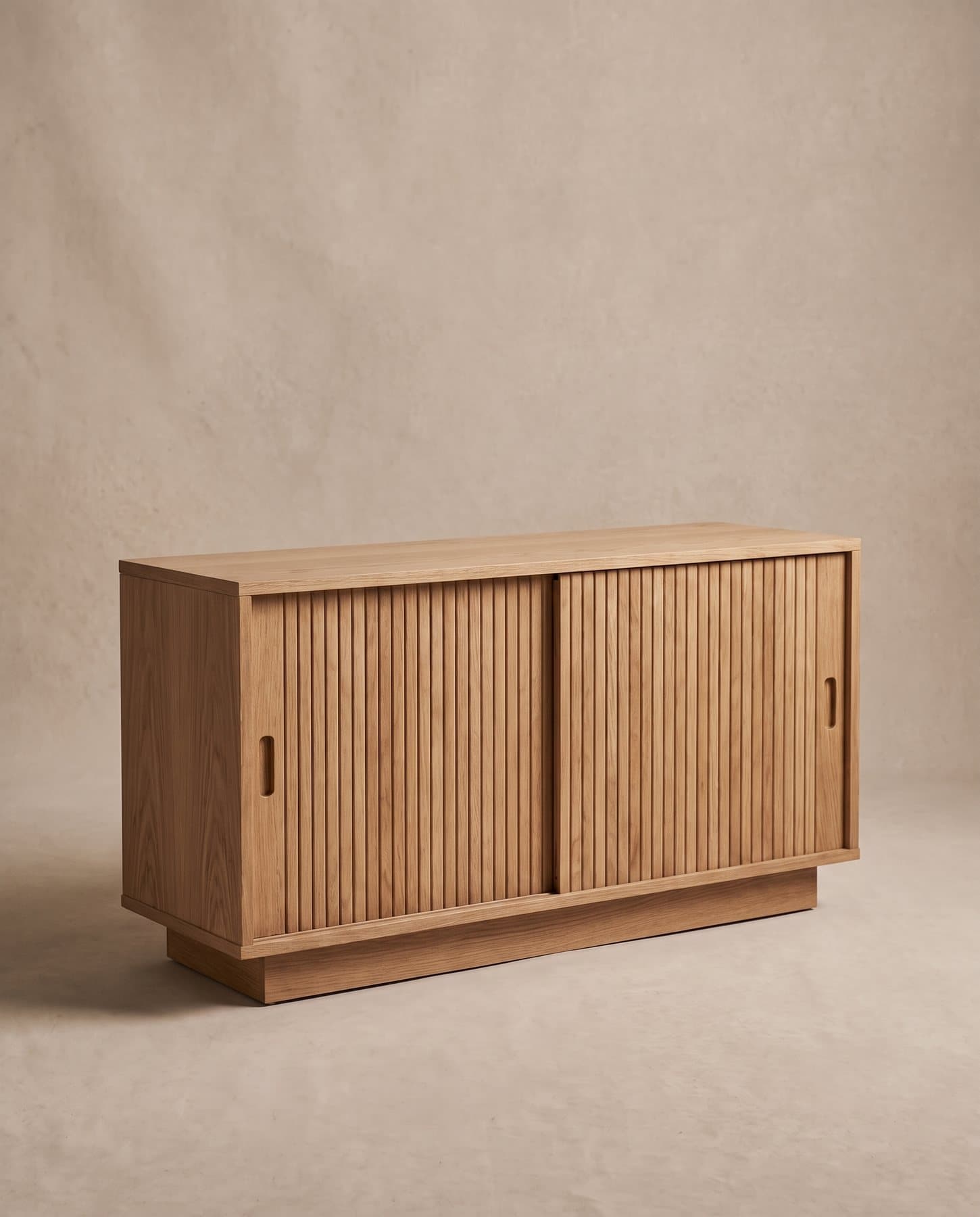
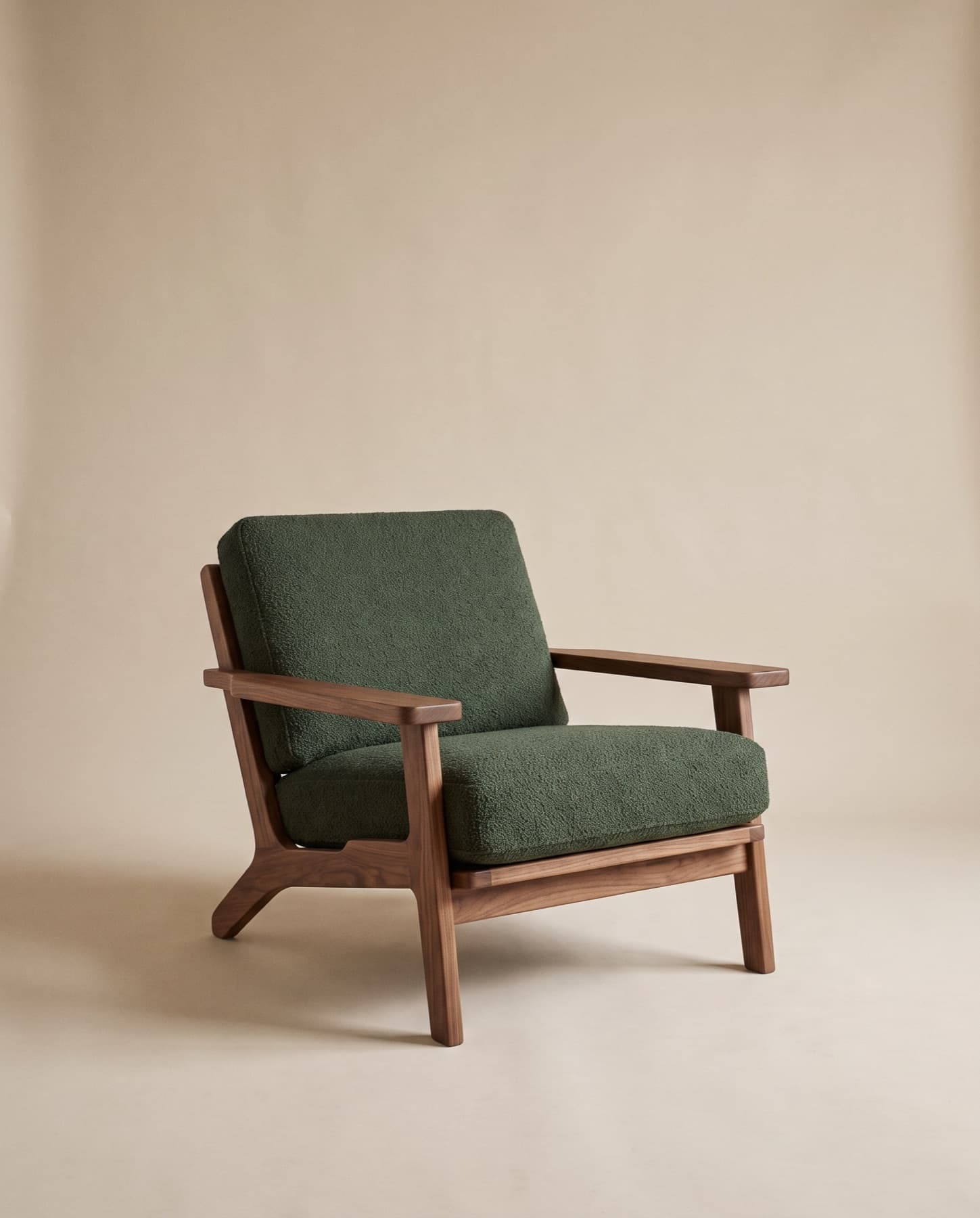
The same oak board can look pale and Scandinavian, warm and honeyed, or almost black. The difference is the finish — and the finish also decides how a piece feels to the hand and how it is looked after for the rest of its life.
01Preparation is most of the work
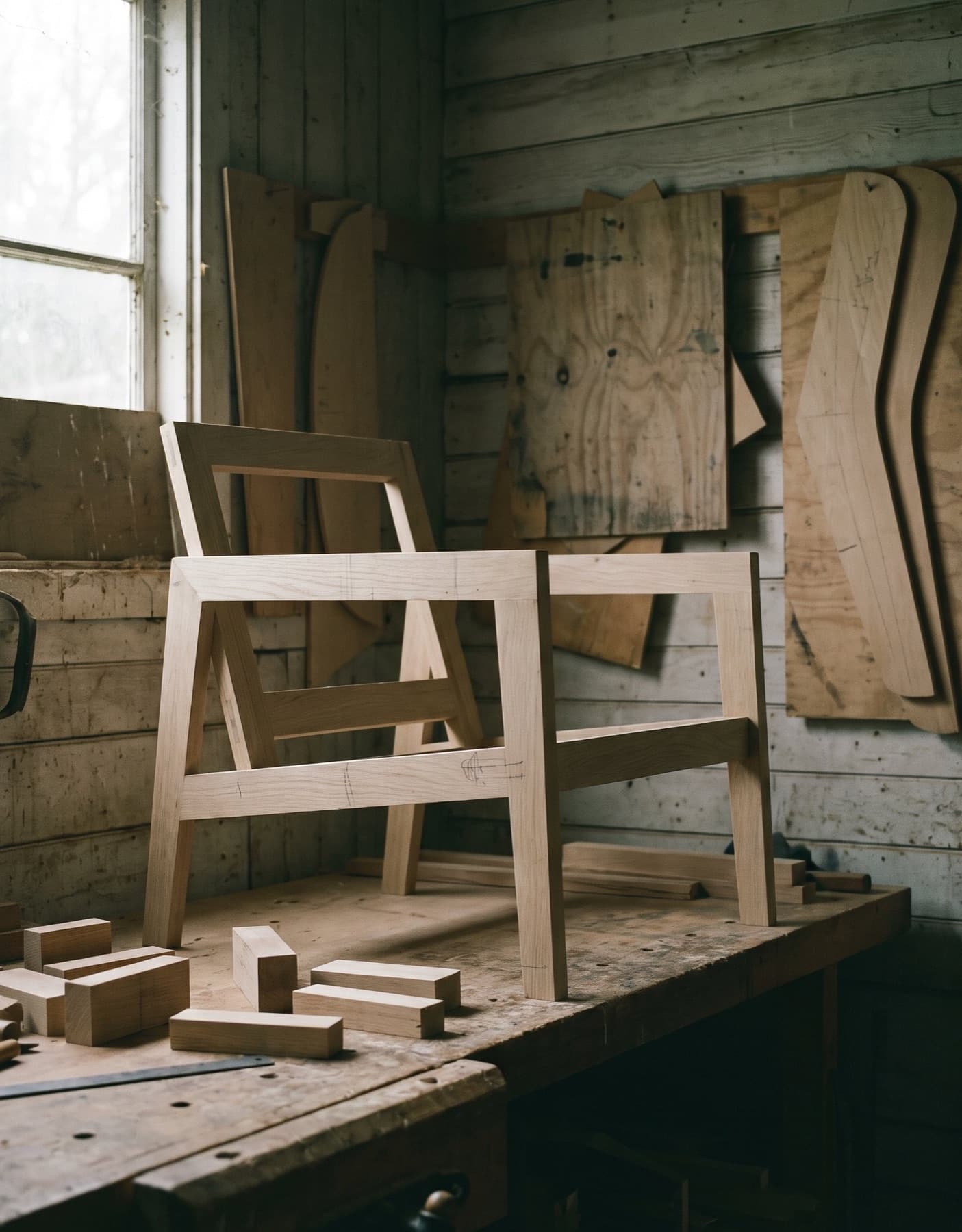
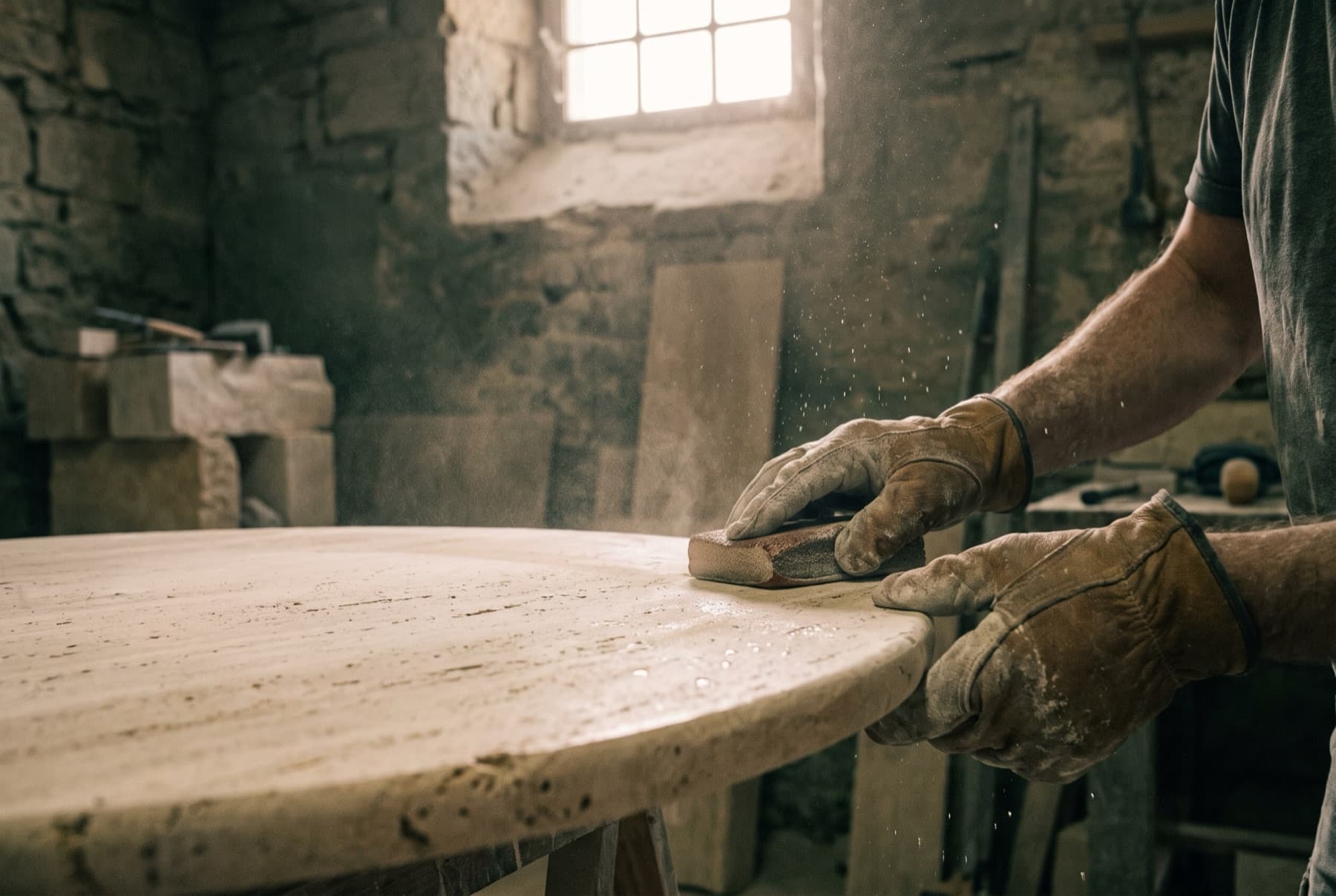
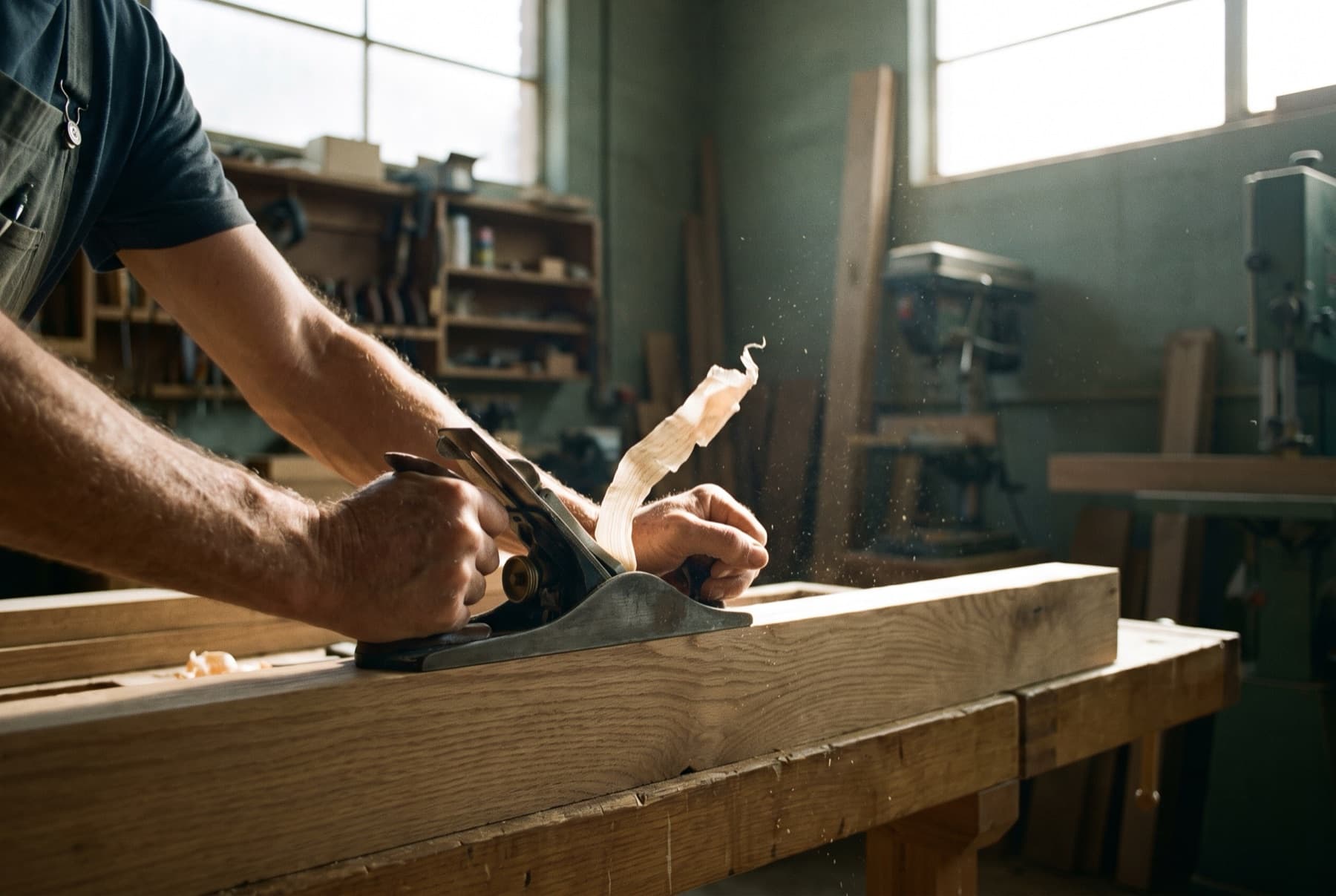
A good finish starts long before anything is applied. Surfaces are planed and sanded through progressively finer grits; the grain is often raised with a damp cloth and sanded again, so it does not lift later when the piece is first cleaned. Edges are softened by hand where they will be touched.
02Oil
Oil soaks into the timber rather than sitting on top of it. It deepens the colour slightly, leaves the surface feeling like wood, and can be refreshed or spot-repaired without stripping the whole piece. The trade-off is upkeep: an oiled table needs re-oiling from time to time, more often where it is used hard.
03Wax and hard-wax oils
Wax gives a soft sheen and a pleasant feel but little protection on its own. Hard-wax oils combine penetrating oils with waxes for a more resistant surface that can still be maintained locally, a common choice for tables and chair arms.
04Lacquer
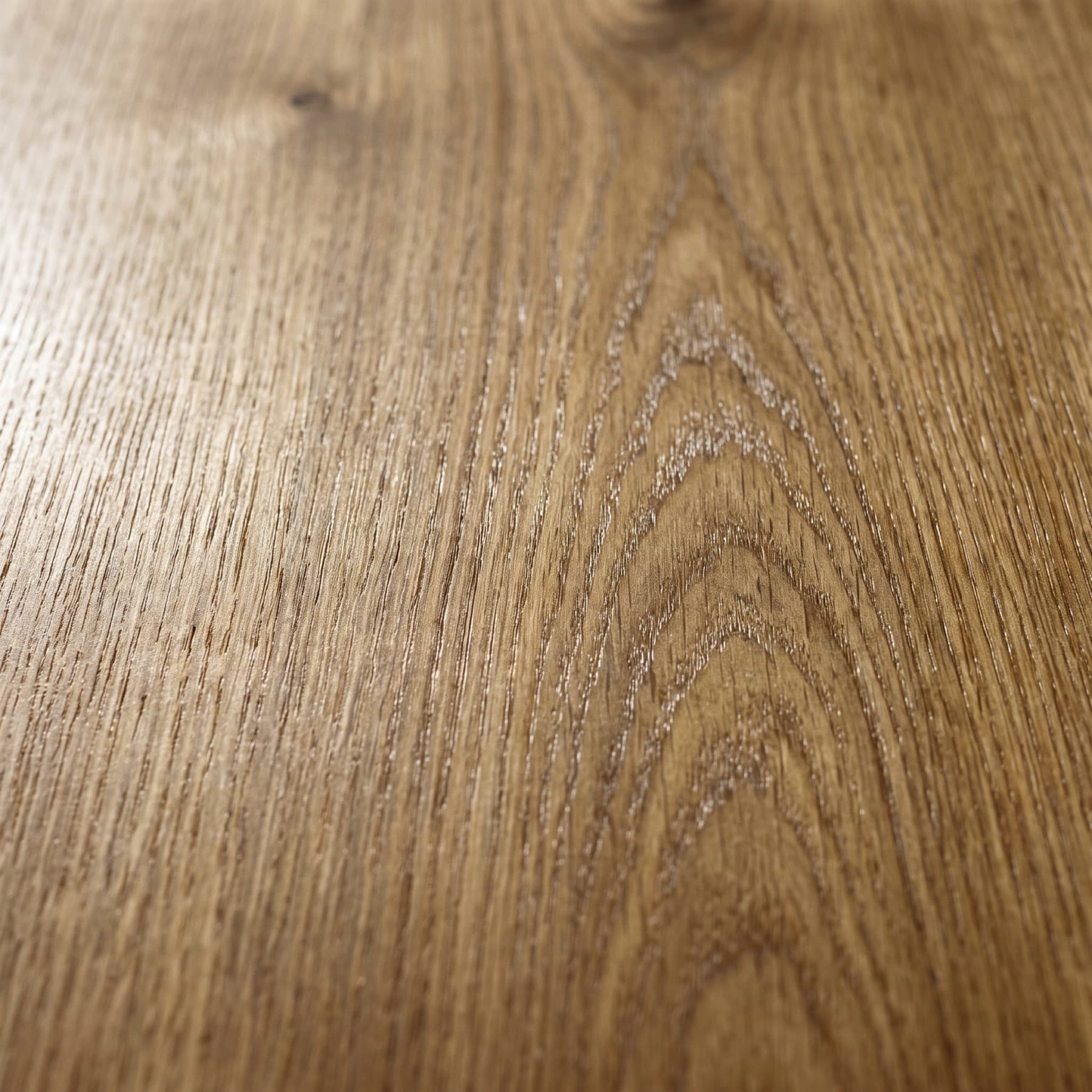
Lacquer forms a thin film over the timber. It gives an even, wipe-clean surface and resists spills well, which suits busy rooms — but a deep scratch goes through the film and is harder to repair invisibly than on an oiled surface.
05Changing the colour
White oils leave a pale, limed look by settling pigment into the grain. Smoked or fumed oak is darkened by exposing the timber to ammonia, which reacts with the tannins in the wood, so the colour sits in the timber rather than on it. Black stains darken the surface while letting the grain show through.
06Choosing
Choose a finish for the way the piece will be used and maintained, not only for its colour on a sample. Ask for the care guide with the sample, and keep it with the furniture.